
The Canadian Dental Association recommends that a child have their first dental assessment within six months of the first tooth appearing, or by one year of age. So when should a child first see a dentist? The purpose of this early visit is to catch problems before they become painful and to help parents establish healthy habits from the very beginning.
Your Child’s First Dental Visit Timeline
Before the first tooth appears
Even without visible teeth, gum health and feeding habits matter. Some parents choose to ask about this at a paediatrician visit or schedule an early dental check-up.
When the first tooth appears
This is generally when the CDA recommends scheduling the first formal dental visit, ideally within six months of eruption.
By the first birthday
If the first tooth hasn’t prompted a visit yet, age one is the latest recommended point for that first appointment.
Toddler years
Many children are seen roughly every six months from this point forward, though your dentist may recommend a different schedule based on individual decay risk.
Preschool and school years
Regular visits continue, often alongside conversations about diet, sealants, and eventually orthodontic screening.
Note: Every-six-month visits are common but not an inflexible rule — your dentist will tailor the schedule to your child’s needs.
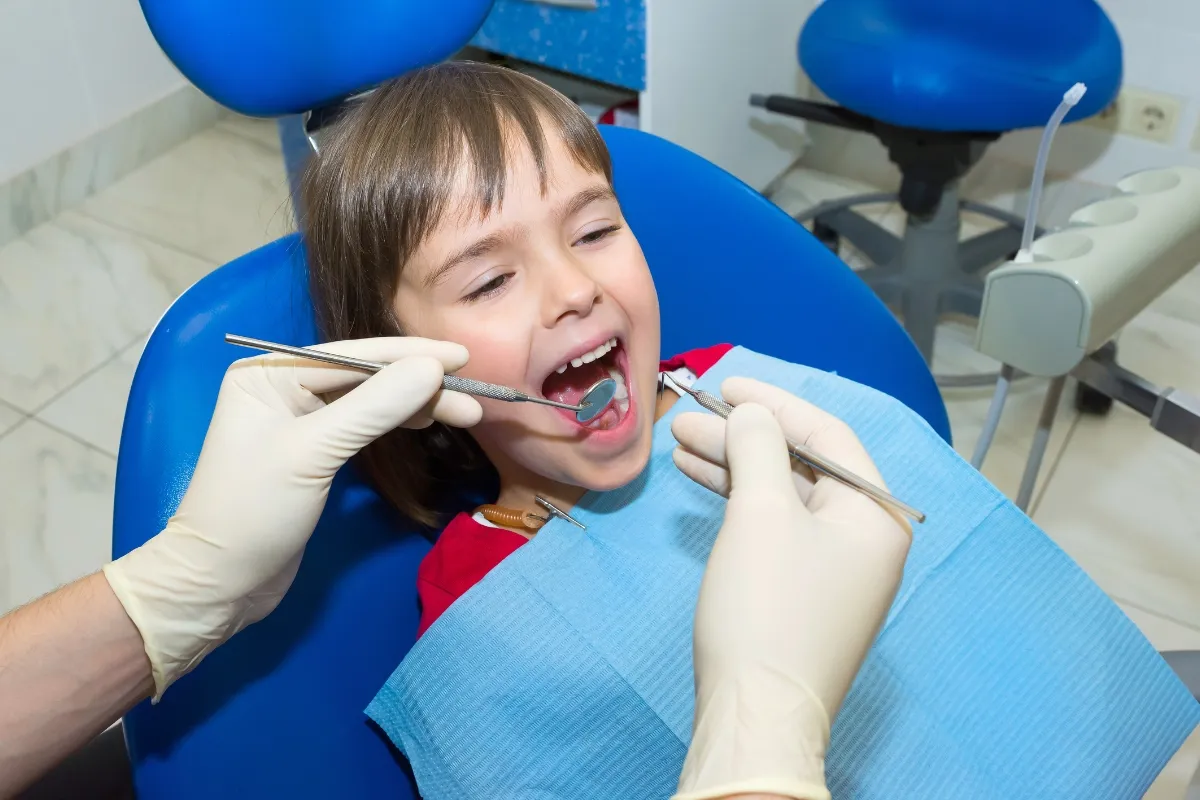
Why Does a Baby Need a Dental Visit So Early?
- Tooth decay can begin shortly after teeth emerge.
- Early visits help track normal development.
- Feeding and bottle habits can be discussed before problems start.
- Parents receive guidance on brushing technique for very young children.
- Fluoride use can be reviewed based on individual risk.
- Teething questions can be addressed directly.
- Early visits support injury prevention awareness.
- Familiarity with the dental office helps children feel comfortable at future visits.
For more on how everyday habits support these early years, see our article on nutrition and children’s dental health.
What Happens at the First Appointment?
- The parent and dental team discuss health history and habits.
- The dentist examines the teeth, gums, jaw, and overall development.
- The parent receives guidance for at-home care.
- The dental team recommends a follow-up schedule.
How to Prepare Your Child
- Use positive, simple language when talking about the visit.
- Choose an appointment time when your child is well-rested.
- Avoid describing any past unpleasant experiences in front of them.
- Bring relevant medical and insurance information.
- Let the office know about any sensory, communication, or anxiety-related needs in advance.
If your child (or you) tends to feel anxious about dental visits, our guide on managing dental anxiety has strategies that apply to both kids and adults.
Reasons to Book Earlier Than Planned
Contact your dental office sooner if you notice:
- Visible spots or colour changes on a tooth.
- Pain.
- Swelling.
- An injury to the mouth or teeth.
- Difficulty eating.
- A tooth that appears damaged or discoloured.
Forest Manor Dental welcomes children of all ages and works to make each visit calm and age-appropriate, starting with that very first appointment.
Frequently Asked Questions
Should my baby see a dentist before they have teeth?
It’s not strictly required, but some parents choose an early check-in to discuss feeding and gum care.
What if my child has no teeth by age one?
This varies by child; mention it at the visit so the dentist can assess development.
Does the first visit include a cleaning?
Not always. The first visit often focuses on examination and parent guidance rather than a full cleaning.
Will my child need dental X-rays?
Not typically at the first visit unless there’s a specific clinical reason.
How often should children visit the dentist?
Many children are seen about every six months, though your dentist may adjust this based on risk factors.
What toothpaste should a toddler use?
Your dentist can recommend an appropriate fluoride level based on your child’s age.
Can a family dentist treat young children?
Yes, general and family dentists routinely treat children of all ages.
What should I do if my toddler refuses to open their mouth?
Let the dental team know, they’re experienced in gently working with reluctant toddlers, and the visit doesn’t need to be forced.
Are baby teeth important if they eventually fall out?
Yes, baby teeth support chewing, speech development, and proper spacing for adult teeth.