
Dental coverage in Canada has changed significantly with the introduction of the Canadian Dental Care Plan (CDCP). For many people in Ontario, this new program has created an important question:
Should you rely on the CDCP, or is private dental insurance still the better option?
The answer depends on your employment situation, income, and access to insurance. While both systems help cover dental costs, they are designed for different groups of people.
This guide explains the key differences between CDCP vs private dental insurance, including costs, coverage, and eligibility for patients in North York and across Ontario.
If you want a full overview of the government program itself, you can read our guide on CDCP dental coverage in 2026.
The Key Difference Between CDCP and Private Dental Insurance
The most important difference is who each system is designed for.
They are not competing plans. Instead, they support different groups of Canadians.
Private Dental Insurance Is Usually Linked to Employment
Most private dental insurance in Canada is provided through:
- Employer Benefit Packages
- Union Benefits
- Professional Associations
- Retiree Plans
Employees usually pay a monthly premium, often shared with their employer.
In exchange, the insurer covers a portion of eligible dental costs up to a yearly maximum.
Private dental insurance works well for people who:
- Have Stable Employment
- Receive Group Benefits
- Want Broader Coverage Options

The CDCP Is Designed for People Without Insurance
The Canadian Dental Care Plan was created for Canadians who do not have access to private dental insurance.
This often includes:
- Self-Employed Workers
- Gig Economy Workers
- Retirees without Benefits
- Families Whose Employers Do Not Offer Dental Plans
- People Between Jobs
In most cases, if you have access to private dental insurance, you will not qualify for the CDCP.
Learn how the CDCP works at our clinic.
Cost Comparison: CDCP vs Private Dental Insurance
The cost structure of each option is very different.
CDCP Costs
The CDCP does not charge premiums.
You do not pay:
- Monthly Membership Fees
- Annual Deductibles
- Enrolment Fees
Instead, the plan uses an income-based co-payment system.
| Family Income | CDCP Coverage | Your Share |
|---|---|---|
| Under $70,000 | 100% covered | No co-payment |
| $70,000–$79,999 | 60% covered | 40% co-payment |
| $80,000–$89,999 | 40% covered | 60% co-payment |
If your family income is above $90,000, you are not eligible.
Private Insurance Costs
Private dental insurance typically involves monthly premiums.
Depending on the plan, costs may range from:
- $30 to $100+ per person per month
Even with insurance, patients often pay part of treatment costs through:
- Deductibles
- Co-Insurance (often 20–50%)
- Annual Coverage Limits
For example, many private plans have yearly maximums of $1,000–$2,000 per person.
Once you reach the limit, you pay the remaining costs yourself.
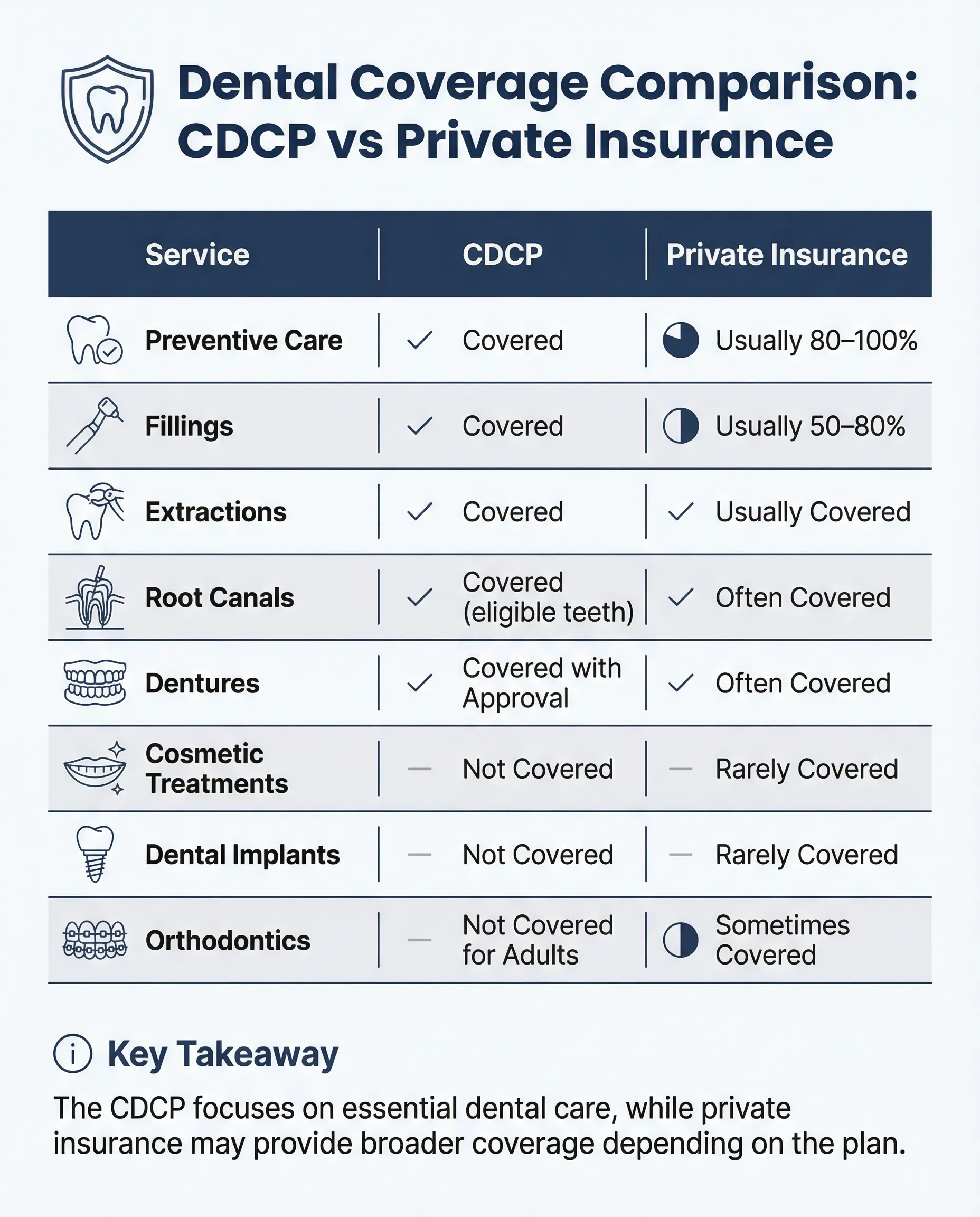
Coverage Comparison
Both the CDCP and private dental insurance cover basic dental care, but there are important differences.
| Service | CDCP | Private Insurance |
|---|---|---|
| Preventive care | Covered | Usually 80–100% |
| Fillings | Covered | Usually 50–80% |
| Extractions | Covered | Usually covered |
| Root canals | Covered (eligible teeth) | Often covered |
| Dentures | Covered with approval | Often covered |
| Cosmetic treatments | Not covered | Rarely covered |
| Dental implants | Not covered | Rarely covered |
| Orthodontics | Not covered for adults | Sometimes covered |
Where Private Dental Insurance Has an Advantage
Private insurance plans, especially strong employer plans, may offer broader coverage.
Some plans include partial coverage for:
- crowns
- bridges
- orthodontics
- major restorative procedures
These plans may also offer higher annual limits compared with the CDCP fee structure.
For people who require extensive dental work, comprehensive private insurance can sometimes reduce out-of-pocket costs.
Where the CDCP Has an Advantage
For Canadians without dental benefits, the CDCP provides access to dental care that might otherwise be unaffordable.
Key advantages include:
- No Monthly Premiums
- Coverage for Essential Dental Services
- Preventive Care Support
- Accessible Application Through the Federal Program
Even partial coverage can make a meaningful difference for routine dental care such as exams, cleanings, and fillings.
What Both Plans Usually Do Not Cover
Neither CDCP nor most private insurance plans cover everything.
Common exclusions include:
- Cosmetic Teeth Whitening
- Veneers
- Cosmetic Bonding
- Some Orthodontic Treatments for Adults
Dental implants are also typically not covered under the CDCP and are only occasionally covered by private plans.
If you are considering implants or other advanced treatments, it is important to discuss treatment options, costs, and the dental implant recovery process with your dental clinic.
You can explore our available treatments to find the right solution for your smile.
Can You Use CDCP and Private Insurance Together?
In most cases, no.
The CDCP is designed for Canadians who do not have access to private dental insurance.
If you already have a private dental plan through an employer or group program, you are generally not eligible for CDCP benefits.
However, if your circumstances change, for example:
- You Lose Your Job
- Your Employer Stops Offering Dental Benefits
- Your Retiree Coverage Ends
You may become eligible for the CDCP in the future.
Which Option Is Better for North York Residents?
There is no universal answer. The better option depends on your situation.
Private insurance may be better if you:
- have access to a strong employer plan
- need coverage for major restorative procedures
- want orthodontic benefits
The CDCP may be better if you:
- have no dental insurance
- are self-employed or between jobs
- earn under the program income threshold
- need affordable preventive care
If you qualify for the CDCP, it can provide meaningful financial support for routine dental visits.
Dental Coverage Options at Forest Manor Dental
Forest Manor Dental welcomes patients with:
- CDCP coverage
- private dental insurance
- self-pay appointments
The clinic offers direct billing to many insurance providers, which simplifies the claims process for patients.
If you are new to the clinic, you can find helpful information for new patients on our website.
Frequently Asked Questions
Can I combine my employer dental plan with the CDCP?
Generally, no. Having access to private dental insurance usually makes you ineligible for the CDCP.
I am self-employed in Ontario. Which option applies to me?
If you are self-employed and do not have private dental insurance, you may qualify for the CDCP if your income meets the eligibility requirements in Ontario.
Does Forest Manor Dental accept both CDCP and private insurance?
Yes. The clinic accepts CDCP patients as well as many private insurance plans.
Choosing the Right Dental Coverage
Both the Canadian Dental Care Plan and private dental insurance play an important role in helping Canadians access dental care.
Private plans work best for people with strong employer benefits, while the CDCP provides essential coverage for those without insurance.
If you are unsure which option applies to you, the team at Forest Manor Dental can help explain your coverage and guide you through the next steps.
To book an appointment or ask about dental coverage options, call 647-350-6683.
Forest Manor Dental is located at 70 Forest Manor Road, Unit 2-3, North York, close to Don Mills Station with convenient parking available for patients.